> For the complete documentation index, see [llms.txt](https://docs.prismacloud.io/llms.txt). Markdown versions of documentation pages are available by appending `.md` to page URLs; this page is available as [Markdown](https://docs.prismacloud.io/content-collections/alerts/create-an-alert-rule-cloud-workloads.md).
# Create an Alert Rule for Cloud Workloads
If you want to generate alerts for [cloud workload policies](/content-collections/governance/workload-protection-policies.md), use alert rules to define the target cloud accounts and policies for which you want to generate alerts and send notifications to an external destination.
1. Create a Resource List for Compute Access Group.
Select **Settings > Resource Lists > Add Resource List**. See [Compute Access Group](/content-collections/administration/add-a-resource-list-on-prisma-cloud.md).
2. Create an alert rule.
1. Select \*Alerts > Alert Rules > Add Alert Rule".
2. Add a Name.
Auto-remediation is not supported for Workload Incident and Workload Vulnerability policy. For details on the other optional settings, see [Automations](/content-collections/alerts/create-an-alert-rule-cloud-infrastructure.md).
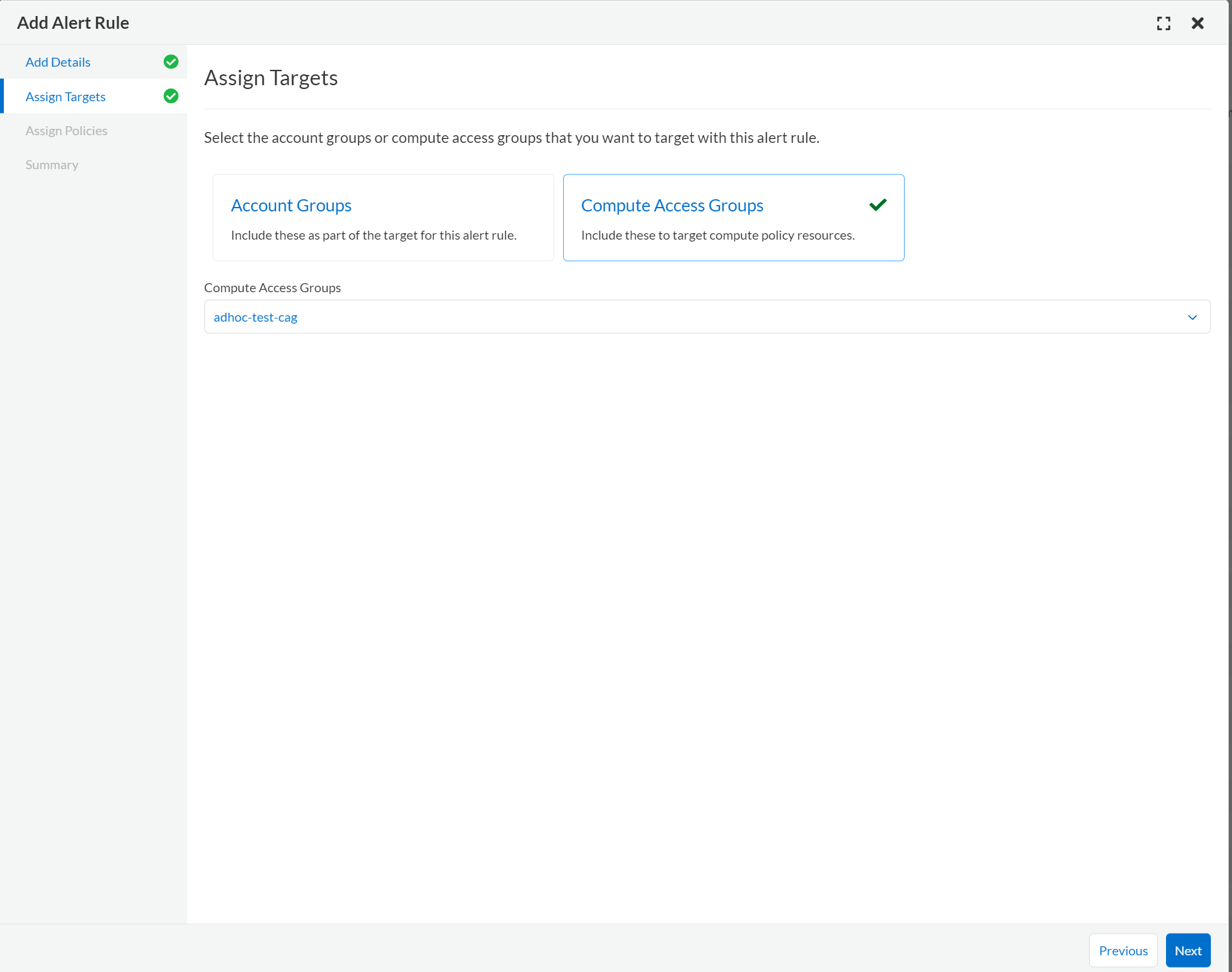
3. Select **Compute Access Group** and choose one ore more to assign to this rule.
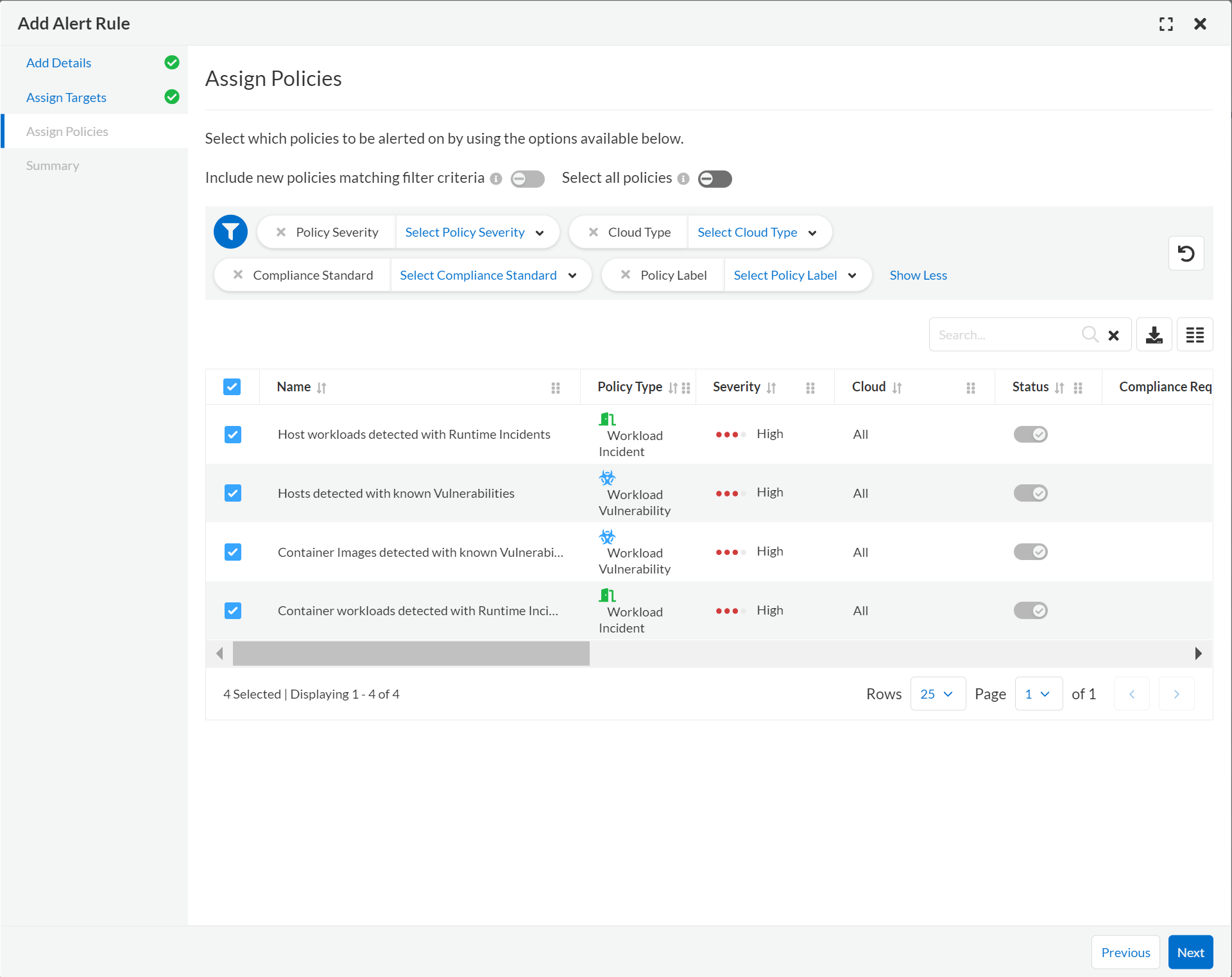
4. Assign policies.
Only Workload Vulnerability and Workload Incident policies are available for Compute Access Groups. To include other policy types, see [run-time checks for other resources](/content-collections/alerts/create-an-alert-rule-cloud-infrastructure.md).
5. Review the summary and save your changes.
3. Verify that the alert rule is working.
You must have the Defender installed on the host or container image.
1. Check for issues on a host or container image.
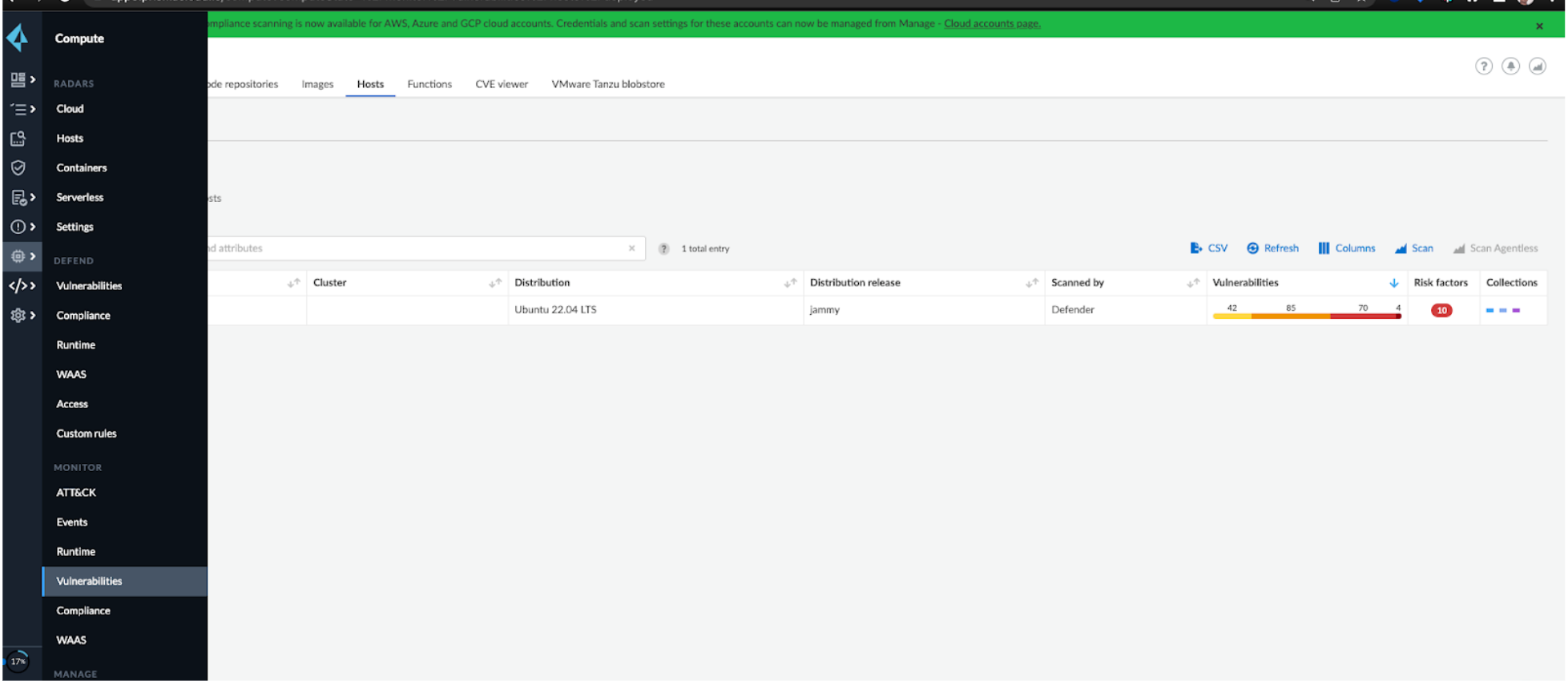
To check any vulnerabilities on a host, select **Runtime Security > Monitor > Vulnerabilities > Hosts**. Find the host name and review the details in the **Vulnerabilities** column .
2. Check for alerts.
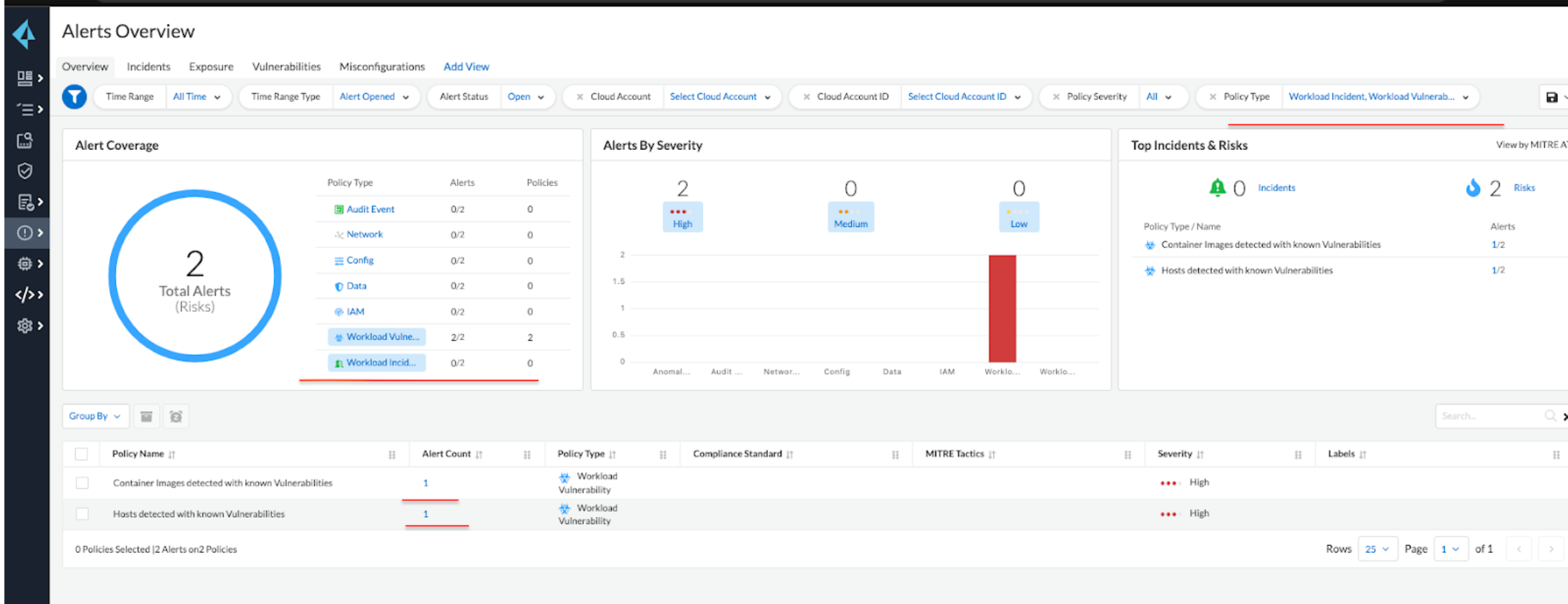
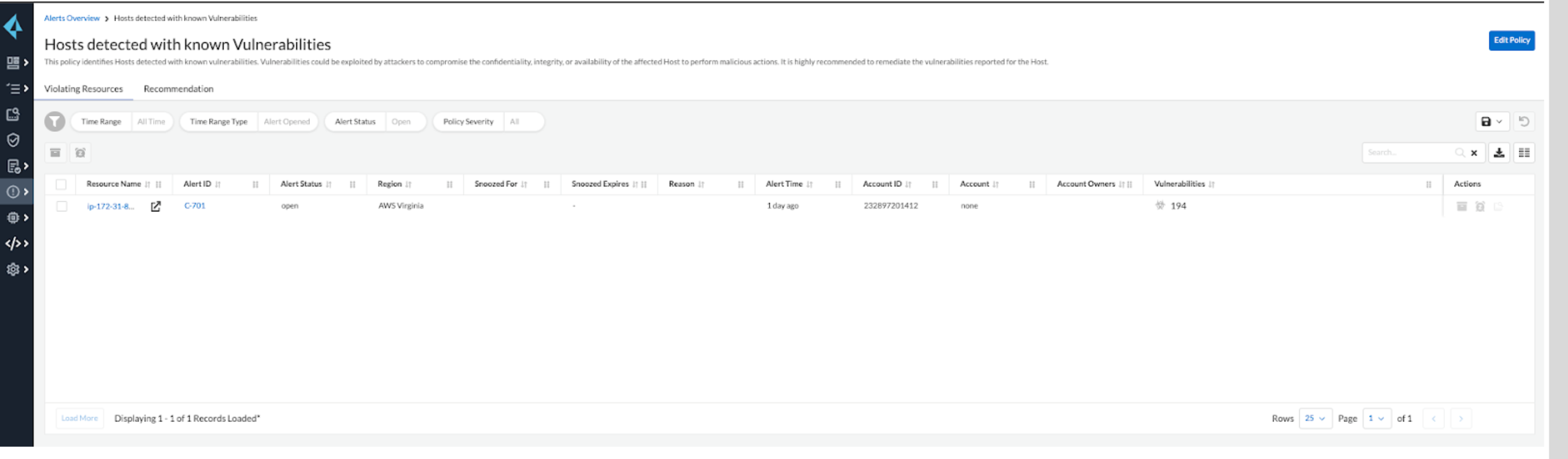
Select **Alerts > Overview**, and set the Policy Type filter to **Workload Vulnerability** and **Workload Incident**.
View the vulnerabilities count details for the violating resources.
## Filter for Alerts Related to Workload Policies
After you create an alert rule, when a policy violation occurs, you can view the alert for the workload incidents and vulnerabilities along with all the other policies that detect run-time issues on the Prisma Cloud console.
1. Select **Alerts > Overview**.
2. Set the Filters for the alerts related to workload policies.
Most of the filters are easy to interpret and use. The following include specific for viewing alerts related to workloads, such as container images or hosts, that do not belong to cloud accounts which are onboarded on Prisma Cloud.
* Cloud Account—Name of the cloud account if account is onboarded on Prisma Cloud; Choose **None** to filter on-premises workload resources.
* Cloud Account ID—Cloud Account ID of the cloud account if account is onboarded on Prisma Cloud; Choose **None** to filter on-premises workload resources.
* Cloud Service, Cloud Region, Cloud Type—Choose **Other** to filter container workloads.
---
# Agent Instructions
This documentation is published with GitBook. GitBook is the documentation platform designed so that both humans and AI agents can read, navigate, and reason over technical content effectively. Learn more at gitbook.com.
## Querying This Documentation
If you need additional information that is not directly available in this page, you can query the documentation by asking a question.
Perform an HTTP GET request on the following URL with the `ask` and `goal` query parameters:
```
GET https://docs.prismacloud.io/content-collections/alerts/create-an-alert-rule-cloud-workloads.md?ask=&goal=
```
`ask` is the immediate question: it should be specific, self-contained, and written in natural language.
`goal` is what the user is ultimately trying to achieve, the reason they need the answer. Sharing it helps GitBook give you a better, more relevant answer. A goal is most helpful when it describes the outcome the user wants rather than restating the question. For example, with `ask=how do I create an API token`, a goal like `automate deployments from our CI pipeline` lets GitBook tailor the answer to that use case.
The response will contain a direct answer to the question and relevant excerpts and sources from the documentation.
Use this mechanism when the answer is not explicitly present in the current page, you need clarification or additional context, or you want to retrieve related documentation sections.